Buying driveway gates? Avoid these mistakes first
A new driveway gate should make your home feel more secure, more private and more finished.
Done properly, it can completely change the front of your property.
Done badly, it can become an expensive headache.
The wrong gate can scrape the ground, block your car, break in bad weather, feel awkward to use or look completely out of place. With electric gates, poor planning can also create serious safety and reliability issues.
At Keith Lomas Fabrications, we design, fabricate and install made-to-measure driveway gates across Leeds, Harrogate, York and the wider Yorkshire area. Here are the most common mistakes people make when buying gates, and how to avoid them.
1. Choosing the gate style before checking the driveway
This is the big one.
A lot of people start with how they want the gate to look. That is understandable. Style matters.
But the driveway should decide the practical design first.
Before choosing between swing gates, sliding gates, composite gates, aluminium gates or wrought iron gates, you need to understand the entrance.
You need to look at:
- The width of the opening
- The slope of the driveway
- The available space behind the gates
- The space to the side of the entrance
- Existing walls or pillars
- Where cars will park
- How close the entrance is to the road
- Whether pedestrians or visitors need access
- Whether the gate will be manual or electric
A beautiful swing gate is not much use if your driveway rises sharply and the gate catches the ground. A sliding gate is not much use if there is nowhere for it to slide.
The right process is simple.
Measure the entrance, understand the driveway, then choose the gate style.
2. Not thinking about how the gates will be used every day
A gate is not just something to look at.
You will use it every day.
That means the design needs to suit your normal routine. Think about how you actually live.
Do you have more than one car? Do visitors come often? Do you get regular deliveries? Do children, pets or older relatives use the entrance? Do you need to open the gate from inside the house? Is the driveway on a busy road? Do you want the postman to get in? Do tradespeople need access when you are out?
These small details matter.
For example, if you have electric gates but no sensible visitor access, you may end up constantly answering phone calls just to open the gate. If you park close to the entrance, swing gates may become frustrating. If the gate is slow to open on a busy road, entering and exiting can feel awkward.
A good gate should improve daily life, not make it more annoying.
3. Buying purely on the cheapest quote
Everyone has a budget. That is normal.
But driveway gates are not something you want to buy on price alone.
A cheaper quote may leave out important things, such as proper groundwork, suitable posts, galvanising, powder coating, safety equipment, access control, servicing, or a realistic installation plan.
With electric gates, the cheapest setup can be a false economy if the motor is underpowered, the safety devices are poor, or the installation is rushed.
Things that affect the real value of a gate include:
- Quality of fabrication
- Strength of the frame
- Finish and corrosion protection
- Motor specification
- Safety setup
- Installation quality
- Warranty
- Aftercare
- Servicing support
- Whether the gate is made to measure
A gate should last for years. Saving money upfront is not a win if you end up paying for repairs, adjustments or replacement later.
The better question is not “what is the cheapest gate?”
It is “what is the right gate for this property, and what is included in the price?”
4. Forgetting about safety on electric gates
Electric gates are convenient, but they are also moving machinery.
That means safety is essential.
A proper electric gate installation should include the correct safety features for the site. This may include photocells, safety edges, force limitation, safe positioning of controls and a clear handover.
The gate should stop and react safely if there is an obstruction.
Safety is especially important if there are children, pets, visitors or shared access. It also matters on commercial sites, apartment entrances and any property where the public may be nearby.
Common safety mistakes include:
- Choosing automation without a site risk assessment
- Not fitting suitable safety devices
- Poor positioning of keypads or intercoms
- Not checking force settings
- Ignoring pinch points
- Having no clear manual release process
- Not servicing the gate after installation
A gate that opens and closes is not enough.
It needs to open and close safely.
5. Choosing the wrong material for the property
The material affects the look, weight, maintenance and lifespan of your gate.
There is no single best material for every home.
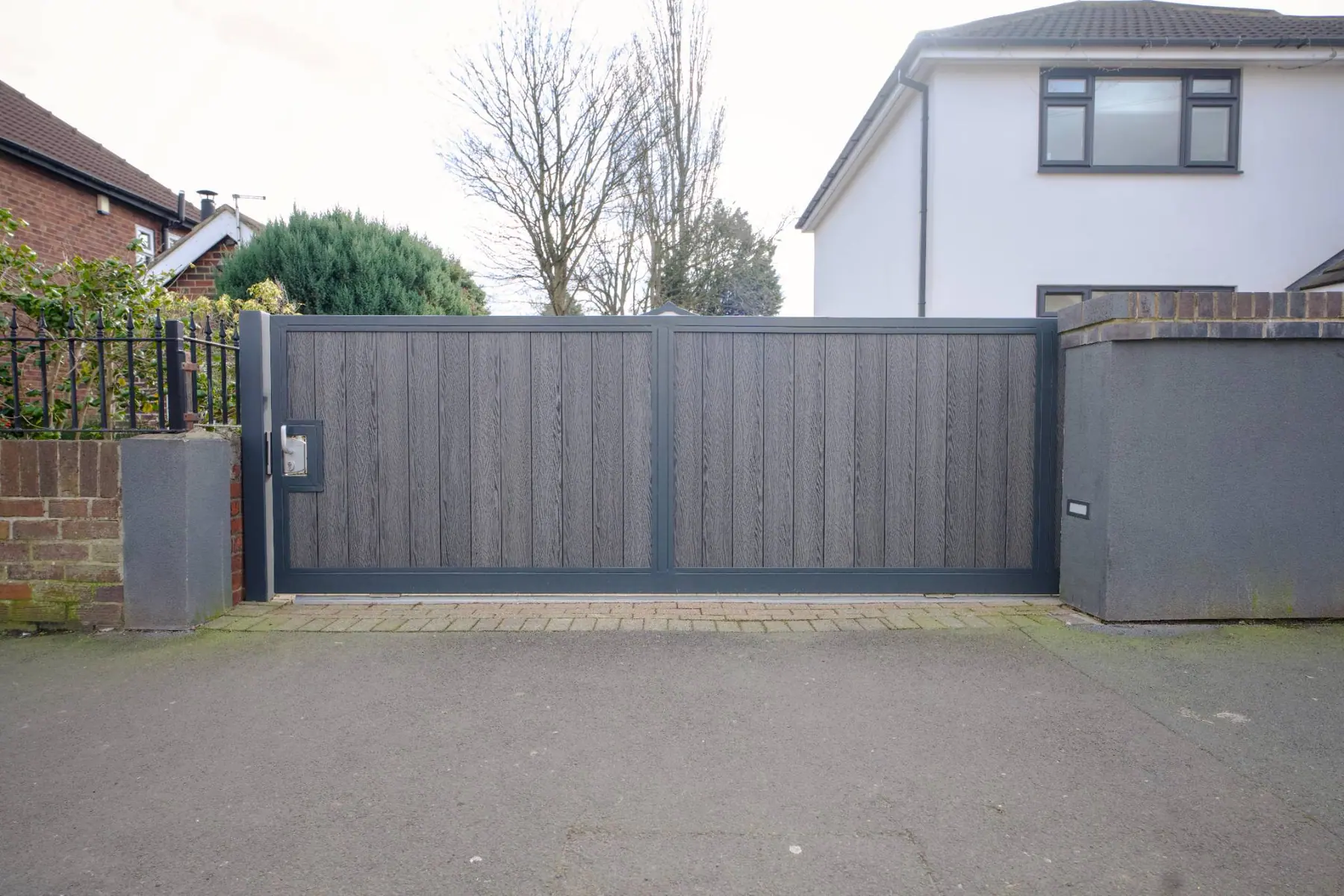
Composite gates are a strong choice if you want privacy and a wood-effect look without regular timber maintenance.
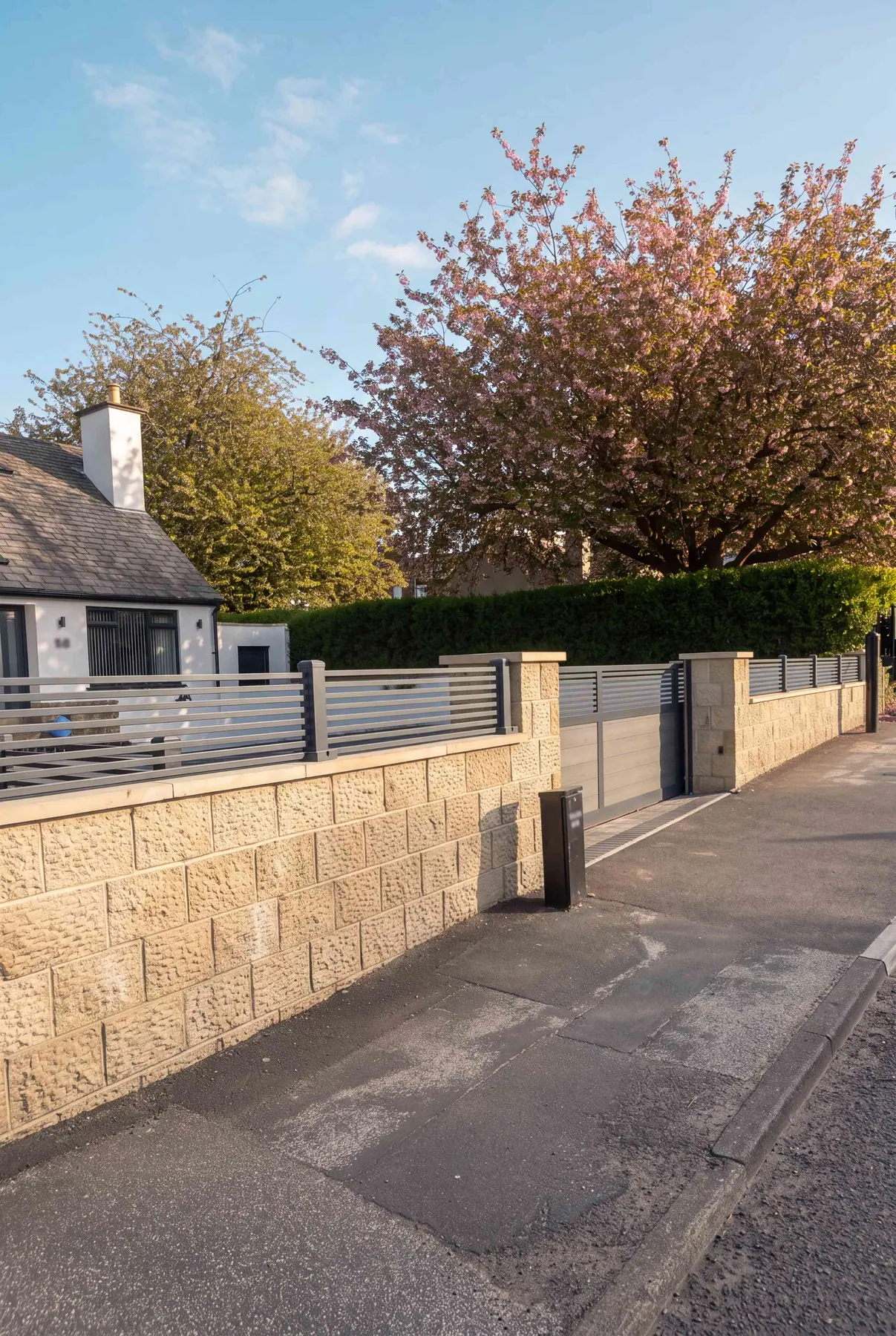
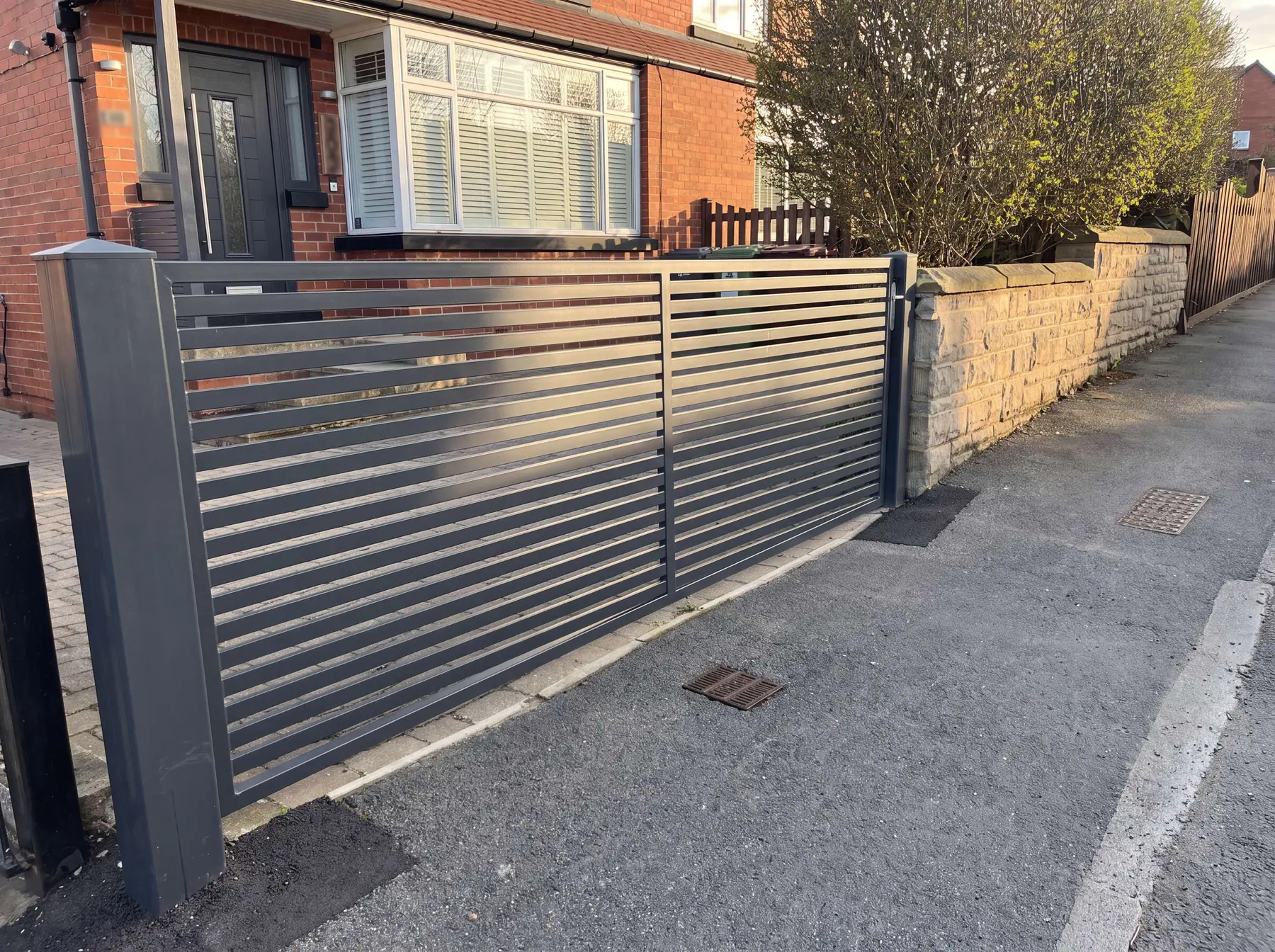
Aluminium gates suit modern homes, clean lines and low-maintenance living. They are lightweight and corrosion-resistant.
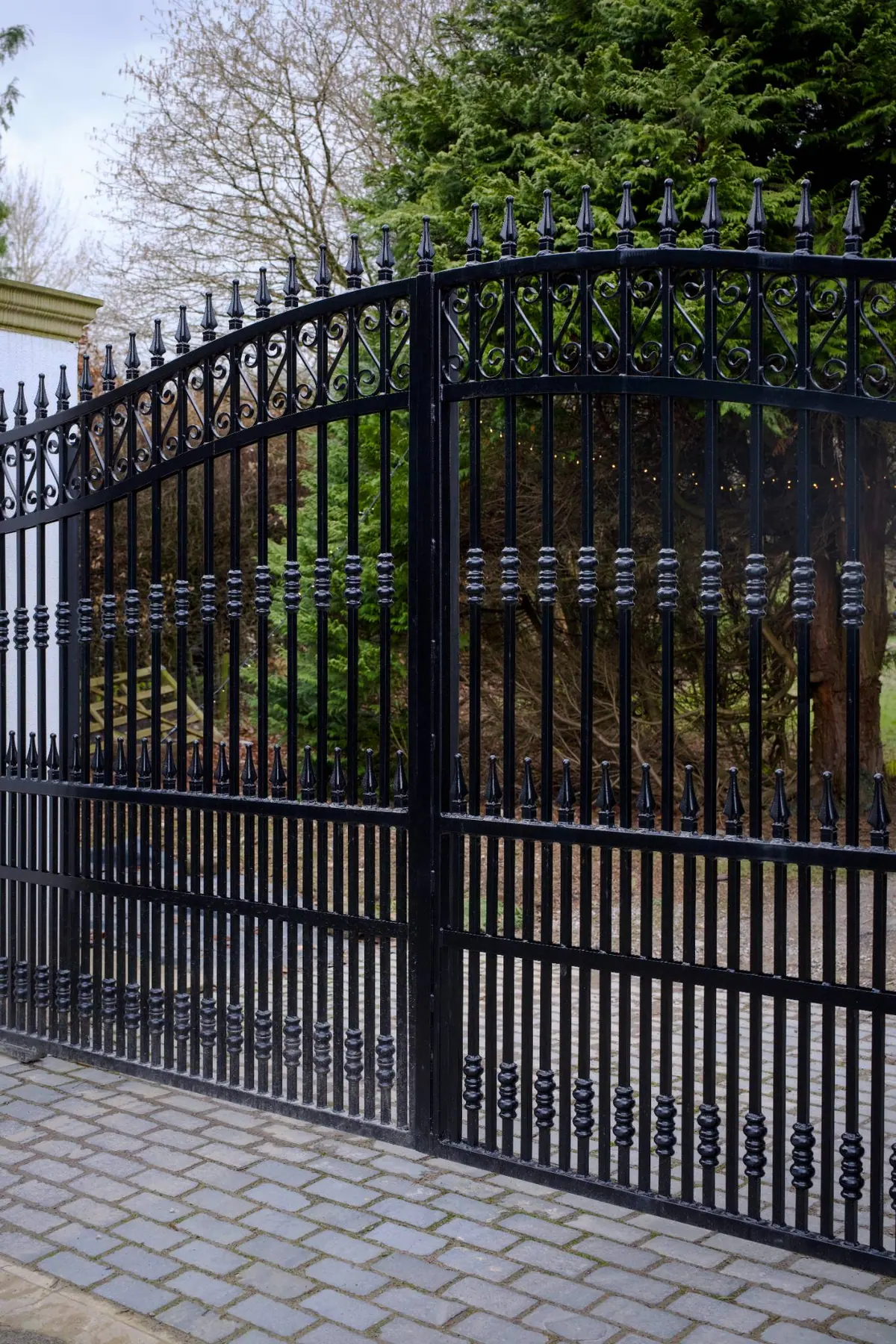
Wrought iron gates work beautifully on traditional properties, larger entrances and homes that need a more classic finish.
Steel-framed gates can offer real strength and flexibility, especially when combined with composite infills or bespoke detailing.
The mistake is choosing a material because it looked good in one photo, without thinking about your own property.
A black aluminium sliding gate might look fantastic on a modern rendered home, but it may feel too sharp on a rural stone cottage. A decorative wrought iron gate might suit a period property perfectly, but offer less privacy than a composite design.
The gate should match:
- The age of the home
- The colour of the brick, stone or render
- The driveway surface
- The boundary walls or fencing
- The windows and front door
- The level of privacy you want
- The amount of maintenance you are willing to do
A good gate should look like it belongs there.
6. Not planning access control properly
Access control is one of the most overlooked parts of electric gate planning.
It is easy to focus on the gate and motor, then treat keypads, intercoms and app control as extras.
But access control determines how easy the gate is to live with.
Options can include:
- Remote controls
- Keypads
- Fobs
- Intercoms
- Video intercoms
- GSM phone entry
- App control
- Exit buttons
- Vehicle loops
A simple remote may be enough for some homes. But if you have regular visitors, deliveries or tradespeople, you may want a keypad or intercom.
If you want to open the gate when you are not at home, GSM or app control can be useful. If you want to see who is at the gate before opening it, a video intercom may be a better fit.
The key is to decide how the gate will be used before the system is installed.
Retrofitting access control later can be possible, but it is often easier and cleaner to plan it properly from the start.
7. Ignoring aftercare and servicing
A driveway gate is not finished the moment it is installed.
It needs to be looked after.
Manual gates need hinges, latches, locks and alignment checked. Electric gates need servicing to keep motors, safety devices, access controls and moving parts working properly.
This is especially important through winter, when cold, rain, leaves, grit and debris can affect outdoor systems.
Before choosing a gate installer, ask:
- Do they offer servicing?
- Do they repair gates they install?
- What happens if something stops working?
- Is there a warranty?
- Are parts easy to source?
- How often should the gate be serviced?
- Who do you call if there is a fault?
Aftercare is not a boring detail. It is what keeps the gate working years after installation.
A good gate company should care about what happens after the final invoice.
Bonus mistake: Not checking planning and boundaries
Planning permission is not always needed for driveway gates, but you should not assume.
Height, location, road access, listed buildings, conservation areas and boundary changes can all matter.
As a general rule, gates next to a road or public footpath need more care, especially if they are over certain heights or open outwards.
You should also be clear on where your boundary sits. Installing gates or posts in the wrong place can create problems with neighbours, access rights or highways.
Before work starts, check:
- Where the boundary is
- Whether the gate is beside a road or pavement
- Whether outward opening is allowed
- Whether the property is listed
- Whether it is in a conservation area
- Whether visibility will be affected
- Whether any existing walls or pillars are shared
A few checks early can save a lot of hassle later.
What should you do before getting a quote?
Before asking for a quote, it helps to gather a few details.
You do not need perfect measurements, but the more information you can provide, the more useful the first conversation will be.
Try to send:
- Your postcode
- A photo from the road looking at the entrance
- A photo from inside the driveway looking out
- Rough width between pillars or posts
- Whether the driveway slopes
- Whether you want manual or electric gates
- Any style you like
- Whether you want privacy
- Whether visitors and deliveries need access
- Any existing problems with the entrance
This gives the installer a much better idea of what is possible.
What makes a good driveway gate?
A good driveway gate should be three things.
It should be practical. It should suit the way you use the driveway.
It should be safe. Especially if it is automated.
It should look right. Not just in isolation, but as part of the whole front of the property.
The best gates are not picked from a catalogue. They are designed around the home.
That is the difference between a gate that simply fills a gap and a gate that genuinely improves the property.
Need help choosing the right driveway gates?
Keith Lomas Fabrications designs, fabricates and installs made-to-measure gates across Leeds, Harrogate, York and wider Yorkshire.
Whether you are considering electric gates, sliding gates, composite gates, aluminium gates, wrought iron gates or matching railings, we can help you avoid the common mistakes and choose the right option for your home.
Send us a few photos of your driveway, rough measurements and your postcode. We will give you honest advice on what will work, what to avoid and what the next step should be.
Get a quick quote today or book a free survey with Keith Lomas Fabrications.