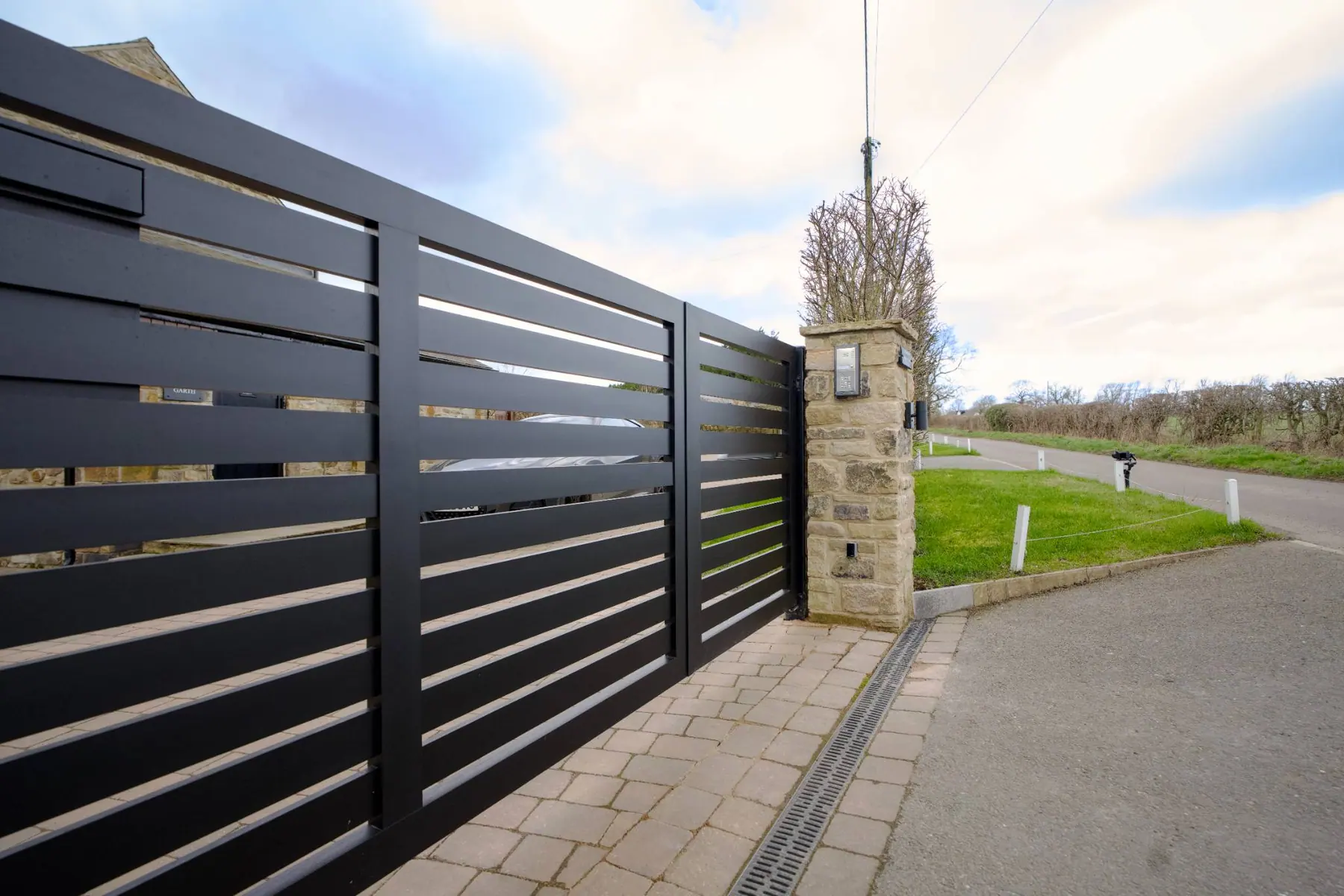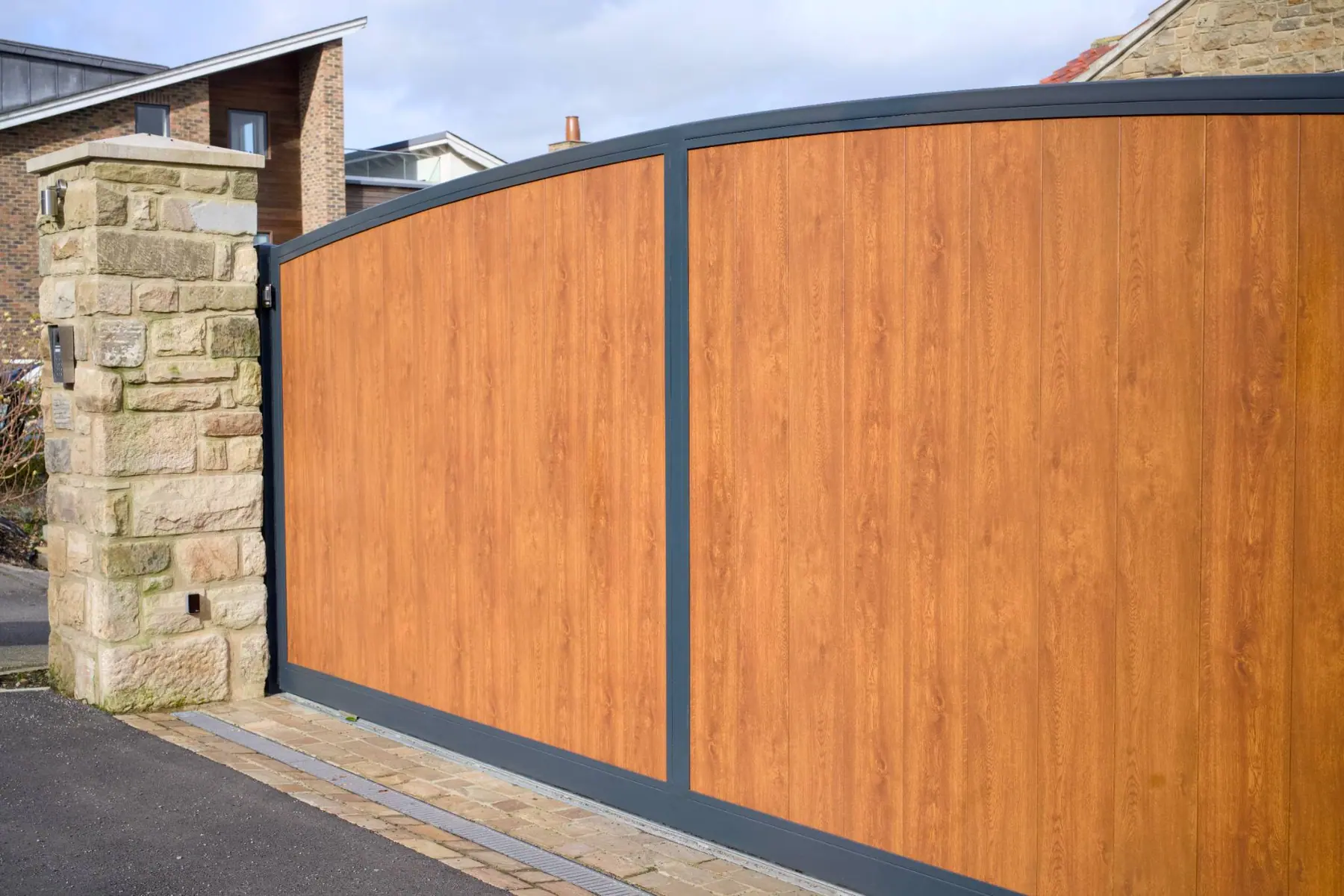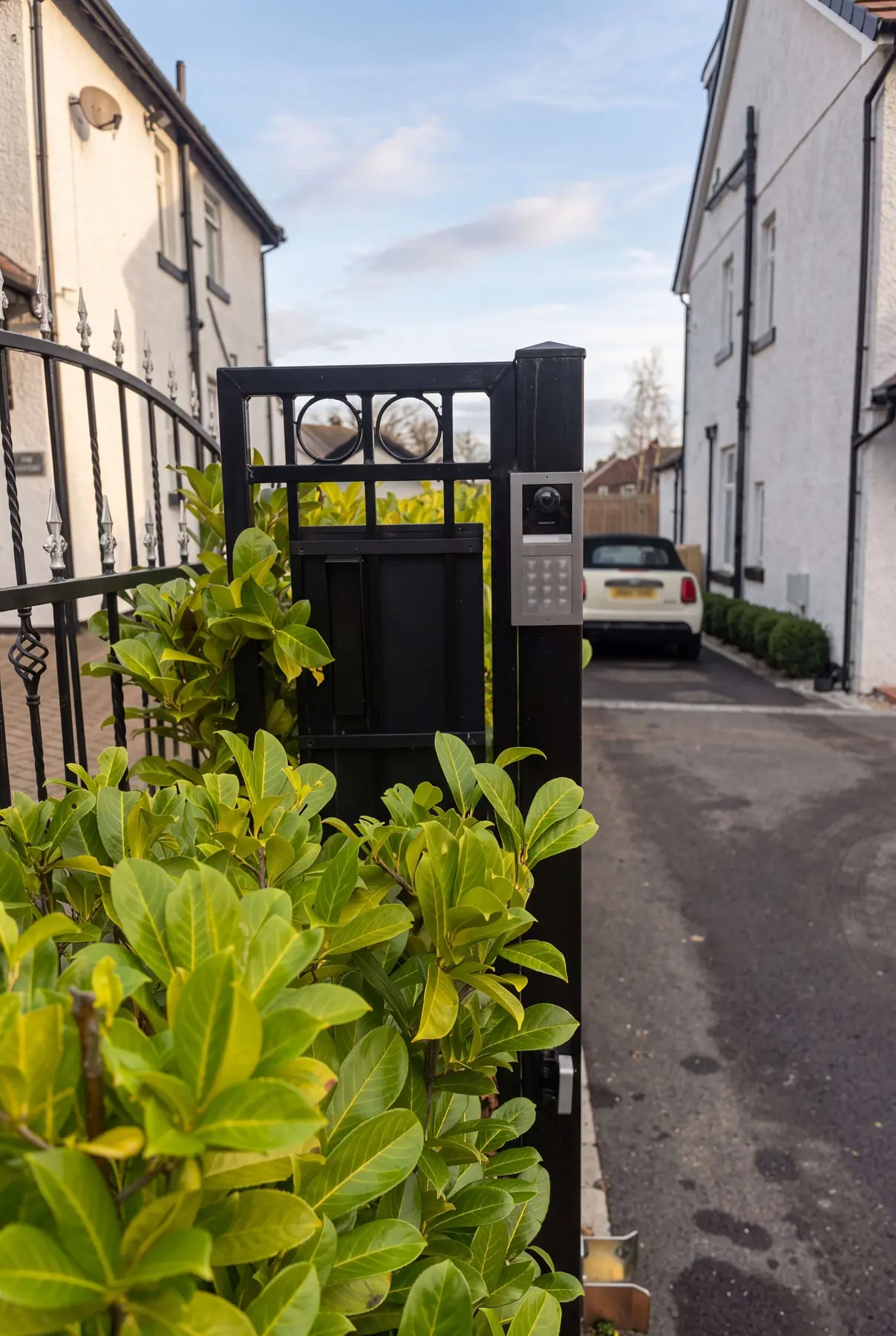
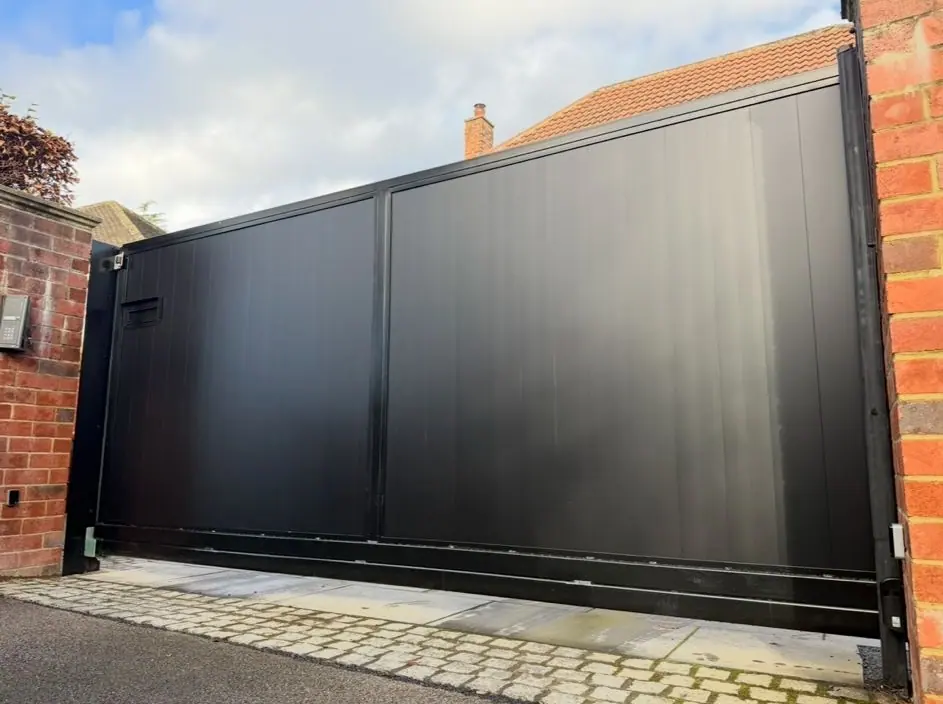
What is a sliding driveway gate?
A sliding driveway gate is a single leaf that runs sideways across the opening instead of swinging into the drive. Electric sliding gates from us start at £7,150 for a 3m opening, and manual tracked sliders at £4,050, fitted with VAT included. They suit sloping drives, short drives and anywhere swing gates would hit the car.
We make and fit both swing and sliding gates, so we've no reason to push you one way. The drive decides. This guide covers when you need a slider, how much side room it takes, tracked versus cantilever, and what each one costs.
When do you need a sliding gate instead of swing gates?
Swing gates need clear space behind them to open into. When that space isn't there, a sliding gate is usually the answer. The common cases:
- The drive rises behind the gate. A swing gate on an uphill drive catches the ground as it opens. A slider moves across the slope instead.
- The drive is short. If you park close to the entrance, swing gates either can't open or you end up reversing to let them.
- The entrance is near a busy road. A slider doesn't swing out towards you, so you're not sat waiting in the road for it to clear.
- The opening is wide. Sliding and cantilever gates span openings that a pair of swing gates struggles with.
We'll often suggest a slider at the survey when someone came in expecting swing gates. One customer put it like this:
"...Taking onboard his experience and advice I went for a new sliding gate rather than a pair of swing gates..."
Carl D., Google review
How much space does a sliding gate need?
A sliding gate needs somewhere to go when it's open. That means a clear run along the inside of your wall or fence, to one side of the opening.
As a rule of thumb, a tracked slider needs a clear, fairly level run a little longer than the opening itself. A cantilever gate needs more again, because it carries an extra tail section behind the opening that balances the gate as it slides.
That run has to be free of steps, trees, manhole covers and parked cars. If one side of the drive has a bay window or a slope in the way, the other side might work. If neither does, a bi-fold gate is worth a look. Our bi-fold gates guide explains those.
Tracked or cantilever: which is better?
There are two ways to slide a gate, and they suit different ground.
| Tracked sliding gate | Cantilever gate | |
|---|---|---|
| How it runs | On wheels along a rail set into the drive | Hangs off a roller carriage beside the opening, nothing across the drive |
| Ground | Needs a level, solid base for the track | Copes with gravel and uneven ground across the opening |
| Side room | A little more than the opening | More, for the balancing tail |
| Upkeep | Keep the track clear of stones, leaves and ice | No track to clog |
| Electric, 3m, from | £7,150 | £7,900 |
| Manual, 3m, from | £4,050 | £4,400 |
Tracked gates are the cheaper of the two and work well on a good, level drive. Cantilevers earn their keep on gravel, on uneven ground and where you don't want a rail across a new drive surface.
How much do sliding gates cost?
Here's our price list for sliding gates at the narrowest and widest standard openings. The range in each cell runs from the cheapest finish to the dearest across composite, aluminium and our two wrought iron designs.
| Sliding gate | 3m opening | 4.5m opening |
|---|---|---|
| Electric, tracked | £7,150 to £7,750 | £7,950 to £8,450 |
| Electric, cantilever | £7,900 to £8,200 | £8,850 to £9,200 |
| Manual, tracked | £4,050 to £4,350 | £5,050 to £5,150 |
| Manual, cantilever | £4,400 to £4,600 | £5,400 to £5,500 |
For comparison, a 3m electric swing pair starts at £6,610. So a slider usually costs a bit more than swing gates of the same width. If your drive needs one, though, it's the gate that actually works. For a price on your own opening, use the instant quote.
Electric or manual sliding gate?
A manual slider is fine if the gate is shut overnight and opened once or twice a day. If you're in and out several times a day, or the gate is heavy and wide, electric is what most people end up wishing they'd had.
Our electric sliding gates run on Nice or DEA automation, fitted by our own engineers along with the groundworks and the power supply. Sliders need the right safety kit, especially safety edges on the leading edge and photocells across the opening, because there are more places a sliding gate could trap something. Our electric gate safety guide explains what each device does.
"Wonderful bespoke sliding automatic iron gate fitted in a day..."
Mark D., Google review
Which materials work for a sliding gate?
- Composite gives you a solid, timber-look gate and the most privacy, on a steel frame.
- Aluminium is light, which helps on a wide automated opening, and it won't rust.
- Wrought iron and steel suit a traditional house and can be made to almost any design.
See all of them on our driveway gates page, or the automation side on electric gates.
Is a sliding gate right for your drive?
Send us a photo from the road, one from the drive looking out and a rough width. We'll tell you whether it wants swing gates, a tracked slider or a cantilever, and why. Then we come and measure up for free and give you a fixed written quote.
Sliding gate questions
Are sliding gates more expensive than swing gates?
Usually a little. On our price list a 3m electric sliding gate starts at £7,150, against £6,610 for a 3m electric swing pair. A cantilever gate costs more again, from £7,900.
Can a sliding gate go on a sloping drive?
Yes. Sliding gates are often the best answer for a drive that rises behind the entrance, because the gate moves across the slope instead of swinging into it. We check the ground and the side run at the survey.
Do all sliding gates need a track?
No. A tracked gate runs on wheels along a rail set into the drive. A cantilever gate hangs off rollers beside the opening, so nothing crosses the drive, but it needs more side room.
How long does a sliding gate take?
Most electric gate jobs, sliding gates included, take eight to twelve weeks from approved design to fitting. We confirm the fitting date when we quote.