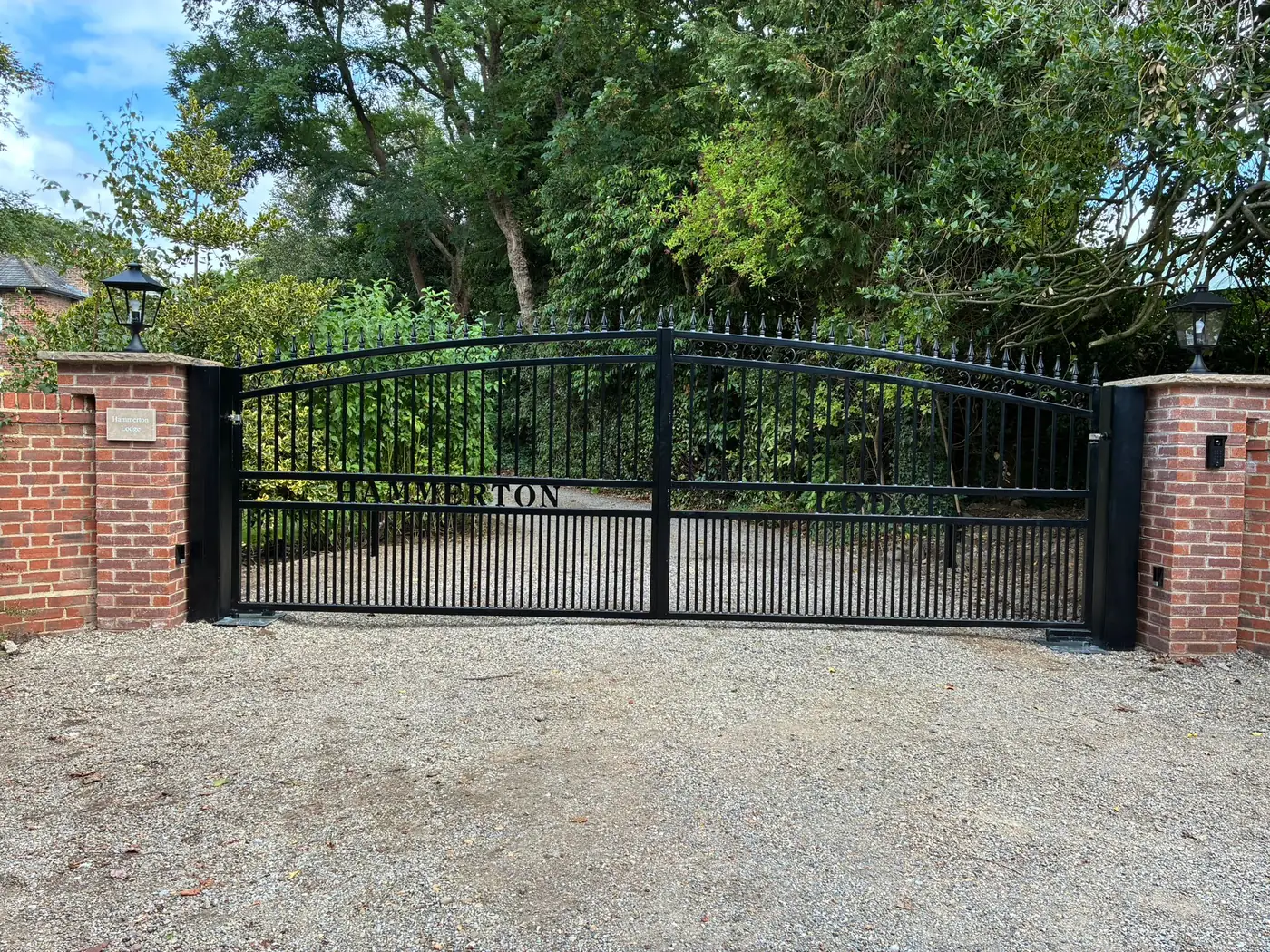
Is a wrought iron gate actually wrought iron?
Usually not. Most new gates sold as wrought iron are made from mild steel, worked in the traditional wrought iron style. Mild steel is stronger and more consistent, and once it's hot-dip galvanised and powder coated it won't rust. "Wrought iron" on a quote today normally describes the look, not the metal.
That isn't a con, and neither option is a compromise. But it's worth knowing what you're paying for. Here's the difference, why the name stuck, and when the real thing still matters.
What is wrought iron?
Wrought iron is an old form of iron with very little carbon in it and threads of glassy slag running through it. It was heated and hammered into shape by hand, which is where the name comes from: "wrought" just means worked.
It's what most Georgian and Victorian railings and gates were made from. It's tough and it can be bent and shaped while hot, which is why old ironwork has all those scrolls and twists. It does rust, though more slowly than you might expect.
The trouble is that hardly anyone makes it any more. Steel replaced it for almost everything in the 20th century. Today, genuine wrought iron mostly turns up as reclaimed stock used to repair historic railings and gates.
What is mild steel?
Mild steel is low-carbon steel. It's the everyday structural steel used for gates, frames and railings, and it's what we work with in our Leeds workshop alongside aluminium and composite.
Because it's made to a consistent specification, every bar behaves the same. It welds cleanly, it's stronger than old wrought iron, and it takes a better finish. A blacksmith can still heat it, bend it and form it into the same scrolls, collars, finials and twisted bars you'd see on a period gate.
Wrought iron vs mild steel: side by side
| Genuine wrought iron | Mild steel in a wrought iron style | |
|---|---|---|
| What it is | Low-carbon iron with slag fibres, hand worked | Low-carbon steel made to a set specification |
| Strength | Tough, but varies bar to bar | Stronger and consistent |
| Availability | Mostly reclaimed stock | Readily available |
| Rust | Rusts slowly if unprotected | Won't rust once galvanised and powder coated |
| Look | Traditional scrollwork | The same traditional designs |
| Best for | Restoring historic ironwork | New gates and railings |
Why do people still call them wrought iron gates?
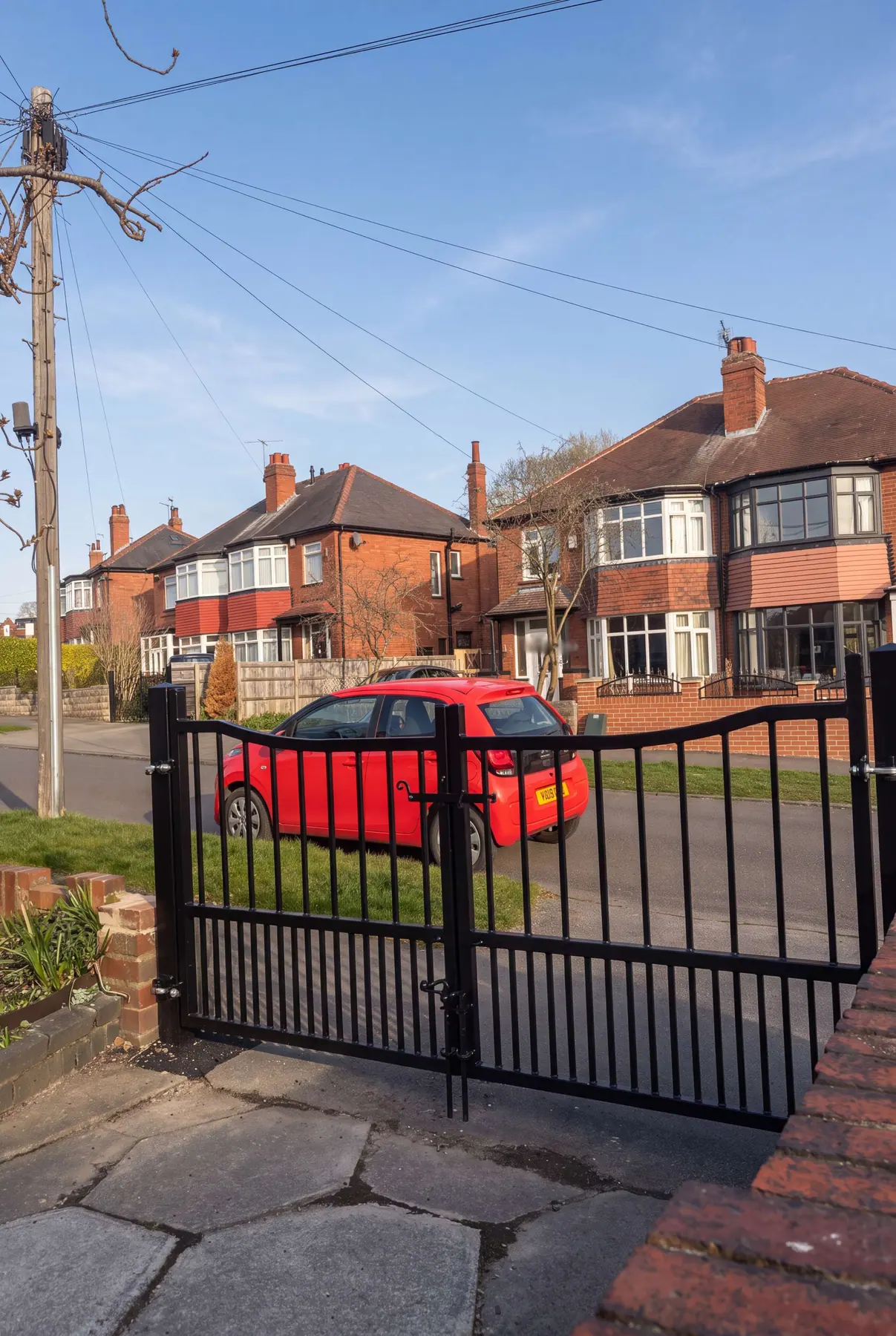
Because the name stuck to the style. Ask most people to picture a wrought iron gate and they'll describe black bars, spear or ball finials, scrolls and an arched top. That's a design, and it can be made in steel just as well as in iron.
So when a gate maker says "wrought iron", they nearly always mean that look. The honest thing is to tell you which metal you're getting. We'll always talk you through what we're proposing and why.
Will a steel gate rust?
Not if it's finished properly. This is the part that decides how long a metal gate lasts, and it's the corner most often cut.
We hot-dip galvanise the steel and then powder coat it. Galvanising coats the steel in zinc, inside and out, so it's protected rather than just painted over. The powder coat goes on top for the colour. A gate that's only been painted, with no galvanising underneath, will start to bleed rust at the welds within a few years.
When you're comparing quotes, ask whether the gate is galvanised before it's coated. If the answer's vague, that tells you something. Our piece on the hidden costs of cheap gate installers covers what else to check.
When does genuine wrought iron still matter?
Mostly on listed buildings and in conservation areas, where you may need consent to change a gate or railings and the council may want a like-for-like repair. If that's you, talk to your council's conservation officer before ordering anything. Our planning permission guide covers the basics.
For a new gate on an ordinary house, steel in a traditional design gives you the look with a stronger, more consistent metal and a far better finish.
How much do wrought iron style gates cost?
Our price list has two wrought iron designs, Bronze and Silver. Here are the starting prices at a 3m opening:
| Gate | Bronze design | Silver design |
|---|---|---|
| Manual pair (swing) | £3,350 | £3,650 |
| Electric pair (swing) | £6,710 | £6,910 |
| Electric sliding | £7,350 | £7,750 |
| Side gate (about 1m) | £1,850 | £1,990 |
Wider openings cost more, up to £9,200 for a 4.5m electric cantilever in the Silver design. Fully bespoke ironwork, matched to a period house or existing railings, is priced after we've seen it. For your own opening, try the instant quote.
Can wrought iron gates be automated?
Yes, and metal gates are the most straightforward to automate because the frame is already doing the structural work. We fit Nice and DEA systems, which we're accredited to install and service, along with the groundworks and the power supply. See our electric gates page for the automation side.
The full range of ironwork we make, including matching railings, is on our wrought iron and metal gates page.
Wrought iron gate questions
Is wrought iron stronger than steel?
No. Mild steel is stronger and more consistent than historic wrought iron, and it takes a better finish. That's why most modern gates described as wrought iron are made from mild steel worked in the traditional style.
Will a wrought iron style gate rust?
Not if it's finished properly. We hot-dip galvanise and then powder coat, which protects the steel from within. A gate that's only been painted will start to bleed rust at the welds within a few years.
How much are wrought iron style gates?
On our price list, a 3m manual pair starts at £3,350 in the Bronze design and an electric swing pair at £6,710, fitted with VAT included. A side gate starts at £1,850.
Can you match my existing railings?
Usually, yes. Send us a photograph and a couple of measurements, or we'll take them at the survey. Matching new ironwork to existing railings is routine work for us.