Composite gates or aluminium gates?
Composite gates and aluminium gates are two of the most popular choices for modern driveway entrances.
Both can look sharp. Both can be made to measure. Both work well as manual gates or electric gates. Both can improve privacy, security and kerb appeal.
But they are not the same.
Composite gates are usually chosen for privacy, warmth and a timber-style finish without the maintenance of real wood. Aluminium gates are usually chosen for clean lines, low weight and a more modern architectural look.
At Keith Lomas Fabrications, we design, fabricate and install made-to-measure composite gates and aluminium gates across Leeds, Harrogate, York and the wider Yorkshire area. This guide explains the difference between the two, so you can choose the right option for your home.
What are composite gates?
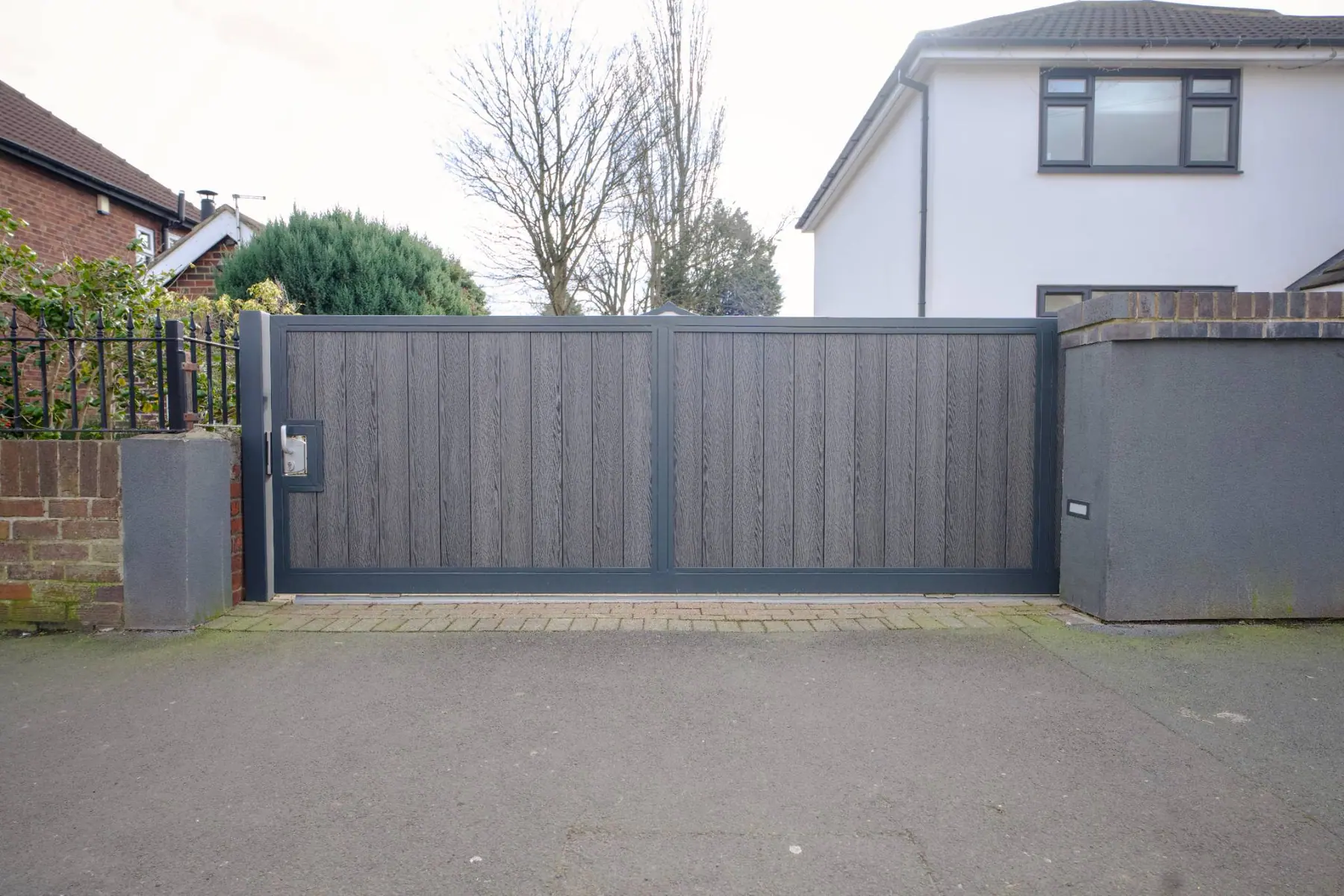
Composite gates usually combine a strong metal frame with composite infill boards.
The frame gives the gate strength. The composite boards create the main visual finish.
Composite is popular because it gives a wood-effect look without needing the same level of maintenance as timber. You get privacy, colour choice and a warmer appearance, but without regular staining or painting.
Composite gates are often used for:
- Private driveways
- Family homes
- Modern renovations
- Homes where privacy is a priority
- Entrances that need a softer, warmer finish
- Electric swing gates or sliding gates
They work especially well when the customer wants the look of timber, but not the upkeep.
What are aluminium gates?
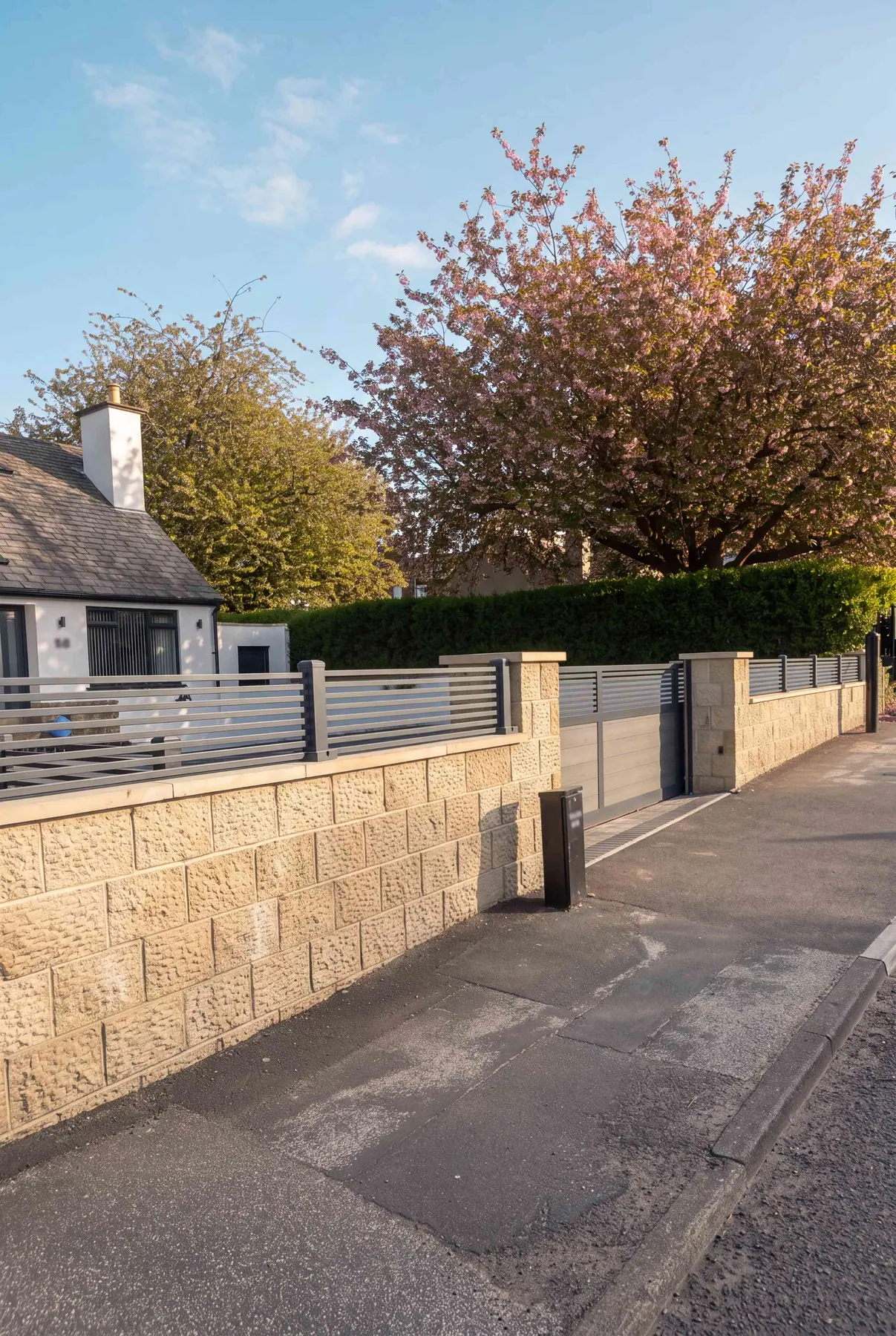
Aluminium gates are made from lightweight, corrosion-resistant aluminium sections.
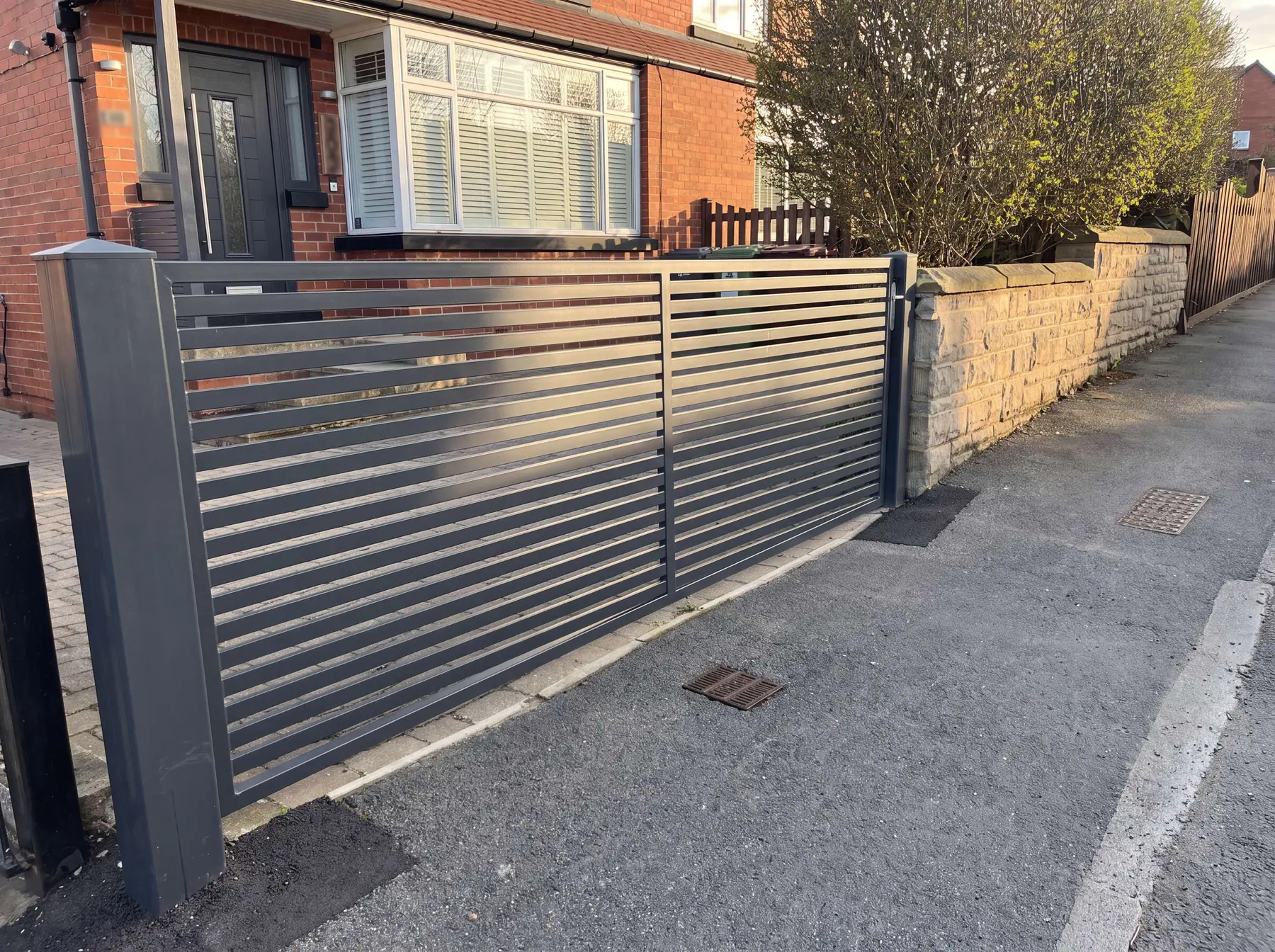
They can be designed as slatted gates, solid gates, framed gates or more open decorative styles. Aluminium is naturally lighter than steel, which can be useful for automation and daily operation.
Aluminium gates are popular because they offer a clean, modern look with very little upkeep.
They are often used for:
- Contemporary homes
- New builds
- Rendered properties
- Minimalist driveways
- Electric sliding gates
- Coastal or exposed locations
- Customers who want a crisp, low-maintenance finish
If you want something neat, modern and durable, aluminium is a strong option.
Which looks better?
This depends on the property.
Composite gates usually look warmer and more natural. They can give the appearance of timber, which works well with stone, brick, render and traditional homes.
Aluminium gates usually look cleaner and more architectural. They work well with modern houses, sharp landscaping, dark window frames and contemporary driveways.
A composite gate can soften the entrance.
An aluminium gate can sharpen it.
The best choice is not just about the material. It is about the house, the boundary walls, the driveway surface, the colour palette and the level of privacy you want.
Which is better for privacy?
Composite gates are often the better choice for privacy.
Because the boards can be arranged with minimal gaps, composite gates can block the view into your driveway and make the entrance feel more secure.
Aluminium gates can also provide privacy, especially if you choose solid panels or tightly spaced slats. However, many aluminium designs are more open or semi-open.
If privacy is your main priority, ask for a solid or near-solid design.
Good privacy options include:
- Full composite infill
- Vertical composite boards
- Horizontal composite boards
- Solid aluminium panels
- Close-boarded aluminium slats
- Taller gate designs where suitable
A privacy gate should still be designed with safety, visibility and planning considerations in mind.
Which is lower maintenance?
Both composite and aluminium gates are low maintenance compared with timber.
Composite boards do not need regular staining or painting. They can usually be cleaned with warm soapy water.
Aluminium gates are also very easy to maintain. A powder-coated finish helps protect the surface and keeps the gate looking clean.
Basic maintenance for both usually includes:
- Washing down the gate a few times a year
- Keeping hinges, tracks or rollers clear
- Checking for dirt around moving parts
- Servicing electric motors if automated
- Avoiding harsh cleaning chemicals
- Checking fixings and alignment
If you want the absolute simplest upkeep, aluminium is hard to beat. But composite is still a very low-maintenance option compared with traditional timber.
Which lasts longer?
A well-made aluminium gate can last for many years because aluminium does not rust like steel.
Composite boards are also designed for outdoor use and are resistant to rot and weathering. However, the quality of the boards, the frame, the fixings and the installation all matter.
The real answer is this: a gate lasts when it is designed properly, made with good materials and installed correctly.
For both composite and aluminium gates, the finish matters. A good powder-coated frame helps protect the metalwork, while quality hardware keeps the gate operating smoothly.
The cheapest gate is rarely the best long-term gate.
Which is better for electric gates?
Both composite and aluminium gates can work well as electric gates.
Aluminium is lightweight, which can be useful for automation. A lighter gate may put less strain on the motor, hinges and moving parts.
Composite gates can also be automated, but the full gate weight depends on the frame and board specification. A properly designed composite gate will have suitable hardware and motor choice.
For electric gates, the key is not just the material. It is the complete system.
That includes:
- Gate weight
- Gate width
- Wind exposure
- Hinges or track
- Motor specification
- Safety equipment
- Access control
- Power supply
- Frequency of use
The motor should be chosen for the gate, not guessed.
Which is better for sliding gates?
Aluminium is a very popular choice for sliding gates because it is light, stable and clean-looking.
Composite can also work well for sliding gates, especially when privacy is the main goal.
For a sliding gate, the most important things are the frame strength, track or cantilever setup, motor choice and installation accuracy.
A sliding gate needs to run smoothly. If it is badly aligned, too heavy for the hardware or installed on poor groundwork, it can become noisy or unreliable.
A good sliding gate should feel solid, quiet and controlled.
Which is better for swing gates?
Both materials work well for swing gates.
Composite swing gates are a strong choice for privacy and a traditional timber-style appearance.
Aluminium swing gates are a strong choice for a modern, lightweight and low-maintenance entrance.
With swing gates, the opening space is important. The driveway needs enough clear room for the gates to open safely.
If the driveway rises sharply behind the gate, sliding gates may be a better option.
Which is stronger?
Strength depends on the full construction, not just the visible material.
A composite gate with a strong steel or aluminium frame can be very robust.
An aluminium gate can also be strong when it is designed with the right sections, supports and hardware.
The weakest point in a gate system is often not the panel. It is the hinges, posts, track, fixings, motor setup or poor installation.
This is why made-to-measure fabrication matters.
A proper gate is built around the entrance, the size, the exposure and the way it will be used.
Which is better for weather?
Both composite and aluminium gates are well suited to UK weather.
Composite boards are designed to resist rot and reduce the maintenance associated with timber.
Aluminium resists corrosion and can be a strong option for exposed areas.
However, weather performance depends on the complete finish.
Things that help a gate stand up to Yorkshire weather include:
- Quality powder coating
- Galvanised steel where used
- Correct drainage around posts and tracks
- Stainless or suitable fixings
- Regular cleaning
- Proper servicing for electric systems
A good finish is not just about appearance. It protects the gate.
Which colour options are available?
Composite gates usually come in timber-style board colours and modern solid tones.
Popular looks include:
- Oak effect
- Dark brown
- Grey
- Charcoal
- Black
- Warm timber tones
Aluminium gates can usually be powder coated in a wide range of colours.
Popular aluminium finishes include:
- Anthracite grey
- Black
- White
- Cream
- Dark bronze
- Custom RAL colours
A darker gate can look modern and premium, but it should suit the house. A warmer composite finish can look softer against stone or brick.
The right colour should work with your windows, front door, garage door, walls and driveway surface.
Which costs more?
There is no single answer.
Composite gates and aluminium gates can both sit at different price points depending on size, design, hardware and automation.
Cost is affected by:
- Width and height
- Manual or electric operation
- Swing or sliding design
- Frame specification
- Board or panel choice
- Powder coating
- Intercoms and access control
- Groundwork
- Power supply
- Installation complexity
A simple manual gate will cost less than a fully automated sliding gate with video intercom and groundwork.
The best way to compare is to get a quote for both options based on your actual driveway.
Are composite gates better than timber gates?
For many homeowners, yes.
Timber gates can look beautiful, but they need more care. Wood can move, swell, split, fade and require regular treatment.
Composite gives a timber-style appearance with less maintenance. It is a practical choice if you like the look of wood but do not want to keep sanding, staining or painting.
That said, some homeowners still prefer real timber for its natural character.
If you want low maintenance, composite is usually the more practical option.
Are aluminium gates better than steel gates?
Not always.
Aluminium is lighter and naturally corrosion-resistant. It is excellent for modern, low-maintenance gates.
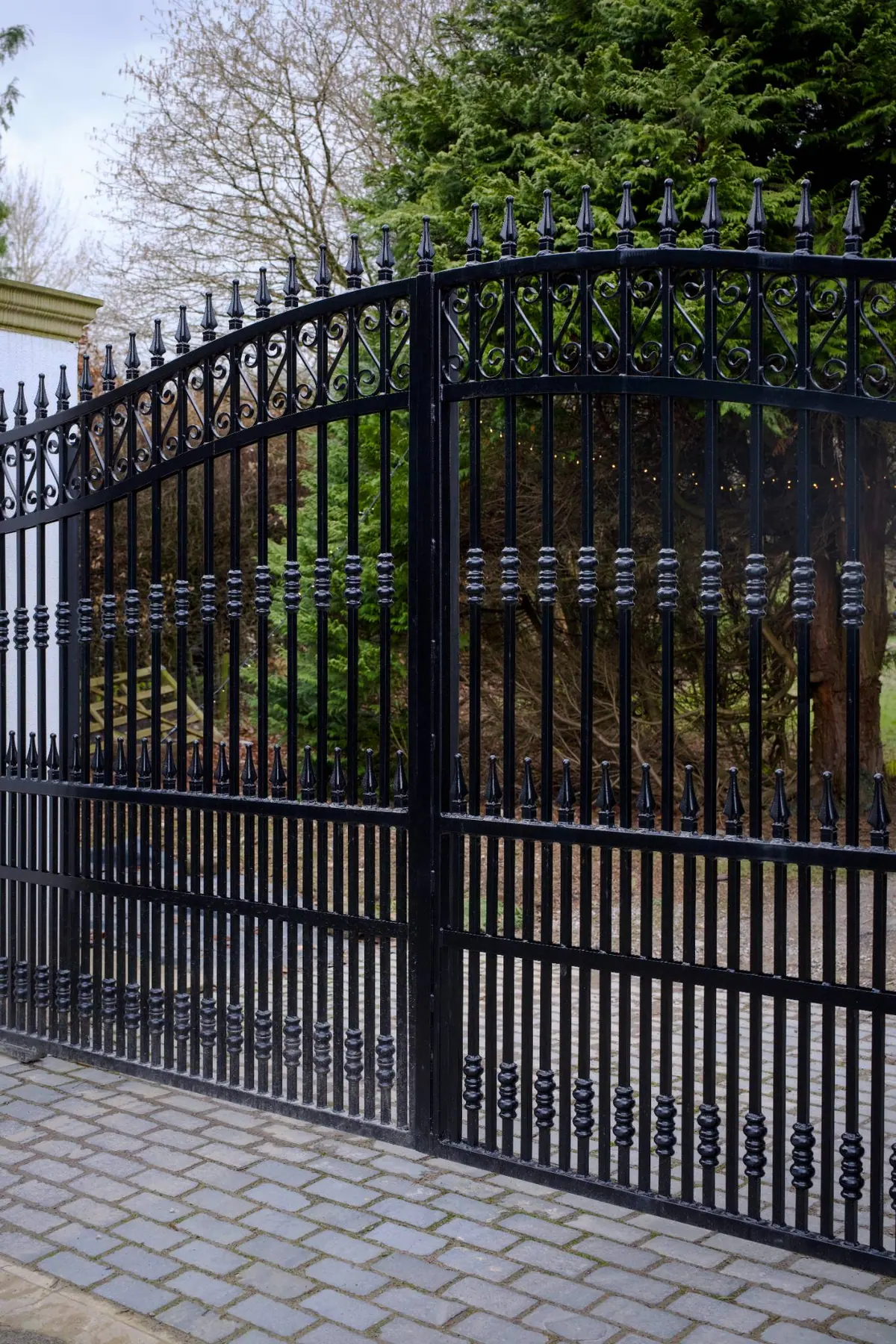
Steel is heavier and very strong. It works well for wrought iron designs, ornate gates and certain traditional styles. Steel does need the right finish to protect it from rust, such as galvanising and powder coating.
The right choice depends on the design, use and property style.
Quick comparison
|
Feature |
Composite gates |
Aluminium gates |
|---|---|---|
|
Best for |
Privacy and timber-style warmth |
Modern low-maintenance design |
|
Appearance |
Wood effect, solid, warm |
Clean, sharp, architectural |
|
Maintenance |
Low |
Very low |
|
Privacy |
Excellent |
Good to excellent |
|
Weight |
Depends on frame and boards |
Usually lightweight |
|
Automation |
Works well when designed correctly |
Excellent for automation |
|
Weather resistance |
Good outdoor performance |
Strong corrosion resistance |
|
Style fit |
Traditional and modern homes |
Modern and contemporary homes |
So, which should you choose?
Choose composite gates if you want privacy, a warmer finish and a wood-effect look without timber maintenance.
Choose aluminium gates if you want a crisp, modern gate that is lightweight, corrosion-resistant and easy to maintain.
Both are good choices when designed and installed properly.
The decision should be based on your driveway, the look of your home and how you want the entrance to feel.
Get advice on composite and aluminium gates
Keith Lomas Fabrications designs, fabricates and installs made-to-measure gates across Leeds, Harrogate, York and wider Yorkshire.
If you are deciding between composite gates and aluminium gates, send us a few photos of your driveway, rough measurements and your postcode.
We will help you compare the options and choose a gate that suits your property, your budget and the way you use your driveway.
Get a quick quote today or book a free survey with Keith Lomas Fabrications.